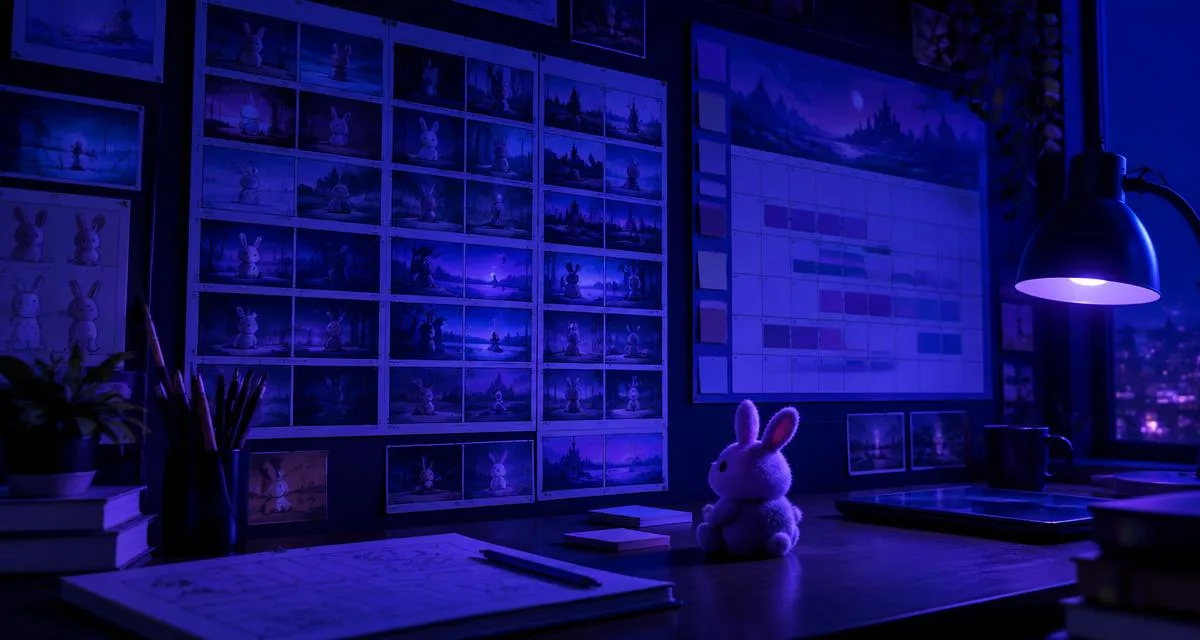
1. Design a character that reads in one second
IvyBears characters are round, soft and expressive. On a phone, viewers decide in a moment whether to keep watching, and a clean silhouette with big eyes and touchable fur wins that moment. When you design your own hero, choose one shape, one signature color and one accessory. Test it as a tiny thumbnail. If it is still recognizable, you have a strong start.
Originality matters here. Avoid making a near copy of a famous bear. Change the species, palette, era or setting until your character could not be mistaken for anyone else's.
A useful exercise is to describe your character in a single sentence that includes a look and a contradiction. For example: a tiny honey-colored bear who is the bravest detective in a city of giants. If the sentence makes someone smile or ask a question, your design has story built in.
2. Keep the storytelling human
Moontrail stresses that writing, direction, voice acting and music stay in human hands. AI accelerates the visuals, but the emotional beats come from people. For creators, that means AI should save you time on rendering, not replace your ideas. Write the stakes, the joke and the twist yourself, then use tools to visualize them.
In practice, keep a simple story document for each episode: who wants what, what stands in the way and how it changes the character. Feed that intent into your visual tools rather than asking them to invent the plot. Your audience can tell when a story has a point of view, and that point of view is the part only you can supply.
3. Ship on a predictable rhythm
The studio claims its pipeline delivers cinema-grade episodes monthly, cutting time and cost by up to 80 percent versus traditional 3D animation. You do not need monthly epics, but you do need a rhythm. A weekly short scene or a twice-monthly mini episode teaches your audience when to come back and teaches you what works.
Plan a small season: four to six connected stories with one goal. Finishing a season builds more momentum than an endless list of disconnected clips.
Consistency also helps algorithms. Platforms tend to recommend channels whose viewers return regularly, and a steady schedule gives each new release a ready audience in its first hours. That early engagement is often what pushes a video to a much wider group of viewers.
4. Borrow big genres, keep the tone cozy
Titles like The Kidnapping of Hercules and The Stolen Idol borrow heist and adventure energy while keeping the characters gentle. That contrast is memorable. Try placing your soft character into a classic genre: a detective case, a space rescue or a treasure hunt. The mismatch creates humor and a reason to watch.
Keep the genre elements light. A cozy heist can be about recovering a stolen picnic basket; a space rescue can save a lost kite. The structure of the genre provides excitement, while the small, warm stakes keep the content welcoming for a wide audience.
5. Make it travel without words
Moontrail aims for stories that travel across cultures. Physical comedy, clear emotions and music carry meaning even when dialogue does not translate. Before publishing, watch your scene on mute. If the story still lands, it can reach a global audience.
Music matters too. Moontrail highlights live orchestral composition, and even a simple, well-chosen soundtrack can tell viewers when to laugh, worry or cheer. Silence and sound effects used with intention will make a short scene feel far more cinematic than extra dialogue.
6. Invite the audience in
The studio says it combines human imagination with audience feedback. Ask viewers which path your character should take next, then honor the choice. Interactive characters, which fans can chat with, turn that feedback into an ongoing relationship. On KOORI you can create an original character, let fans talk with it and spin popular moments into new Reels.
Feedback works best when you ask specific questions. Rather than asking whether people liked an episode, ask which of two paths the hero should choose, or which side character deserves their own story. Specific choices produce clear signals and make viewers feel ownership of what happens next.
Frequently asked questions
How fast did IvyBears grow?
Moontrail reports that Episode 1 reached 15 million views in 30 days after the May 2026 launch, and the channel now reports over 31.1 million subscribers.
Can a solo creator follow this strategy?
Yes, at a smaller scale. Focus on one original character, short consistent episodes and human-written stories.
Do I need expensive software?
No. Character and video tools, including KOORI, let you design a character and create short animated scenes without a studio budget.
Can I make fan content of IvyBears?
Fan works of someone else's characters can raise rights issues. Building your own original character is the safer and more valuable path.
Build your first season
Pick one original fuzzy hero, one big genre and a four-story arc. Create your character on KOORI, test a first scene and publish on a rhythm you can keep.
Sources and further reading
KOORI is an independent platform and is not affiliated with, endorsed by or sponsored by Moontrail or The IvyBears Series. Names are used only to describe and discuss publicly reported information. Figures are as reported by Moontrail on its About page, checked November 16, 2026, and may change.
More from KOORI Journal