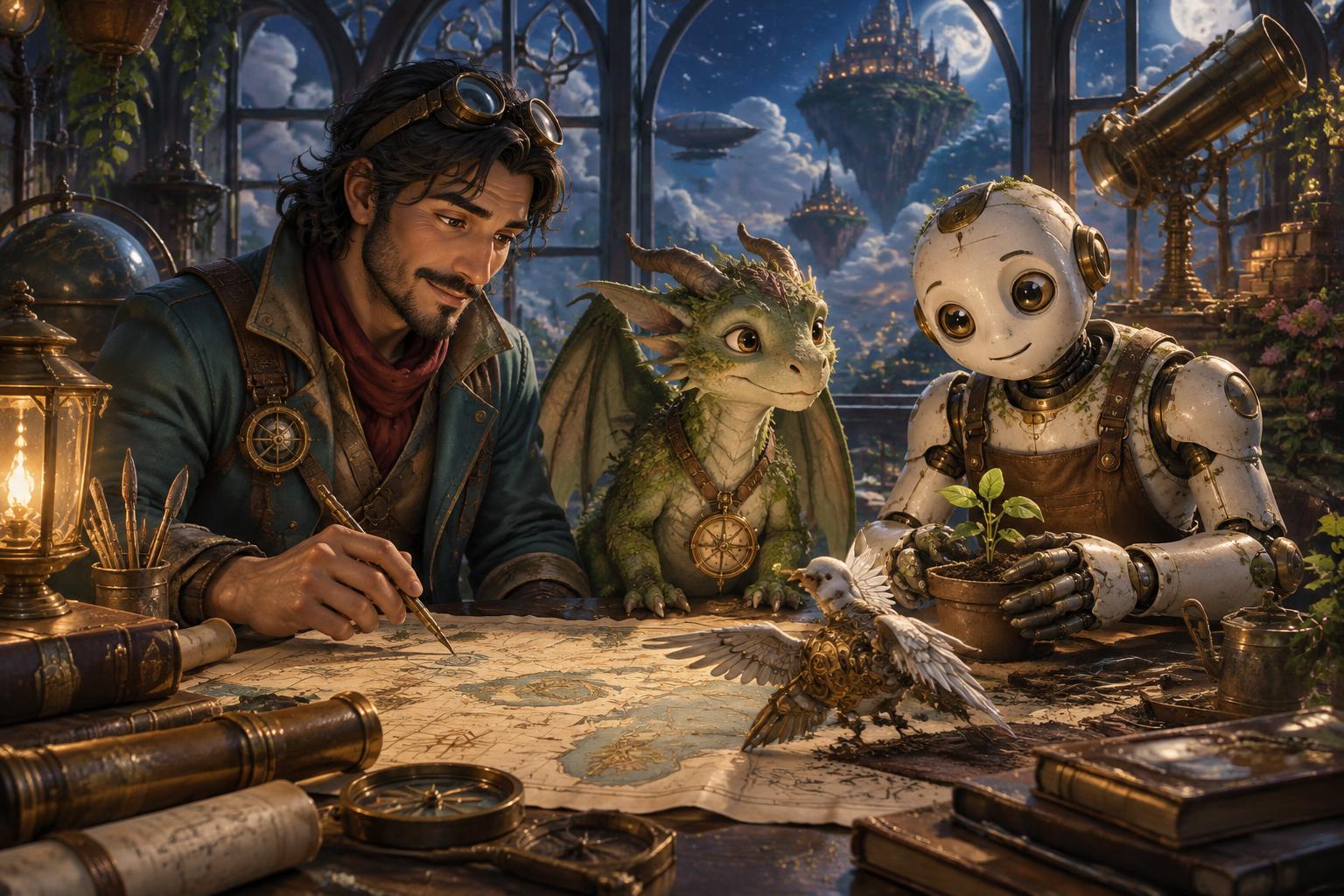
A character backstory template you can actually use
Start with five sentences rather than a complete biography. Where did the character feel at home? What happened to change that? What do they want now? What behavior gets in their way? Who or what connects them to the unresolved past? These questions make history useful without requiring a timeline of every birthday and battle.
Keep the distinction between backstory and personality clear. The backstory explains why an apprentice stopped trusting applause. Personality shows how that distrust appears: checking every compliment for a hidden request, or praising others but refusing praise herself. The first scene puts that pattern under pressure. A visitor arrives with a sincere thank-you, and she has to decide what to do with it.
Once, [character] chose [action] because [reason]. It changed [relationship or home]. Now they want [concrete goal], but [contradiction] gets in the way. When [visitor] arrives with [object or problem], the old choice becomes relevant again.
1. The cartographer with a missing harbor
As a young navigator, this sky pirate altered a map to keep treasure hunters away from a vulnerable harbor. Years later, the harbor has vanished from every official chart. She wants to find its residents, but admitting her original deception might cost the crew’s trust. She treats directions as facts while quietly checking every landmark twice.
Use this for fantasy adventure or a mystery between reluctant teammates. Her old compass is the visual clue, not proof that she knows the answer. Give the visitor a conflicting map and leave both explanations possible.
I unfold a chart showing a harbor you say no longer exists. Your compass points straight at it. “What did you leave off your first map?” Leave my reaction and next move to me.
2. The robot who keeps the garden
A maintenance robot learned gardening from a station cook who left to open a restaurant planetside. The robot still plants an extra row of herbs for her, even though its latest assignment is to close the greenhouse. It wants to preserve their shared work, but confuses keeping a promise with keeping everything unchanged.
This is a cozy sci-fi backstory with a practical conflict, not a demand that the visitor rescue a lonely machine. Let the robot have preferences, competence and options besides waiting forever.
The greenhouse is scheduled to close tomorrow. I find you packing tools but leaving one tray untouched. “Could we move the garden instead of losing it?”
3. The dragon with a borrowed reputation
A gentle moss dragon once received credit for guiding lost hikers home. The real guide was a shy mountain spirit who disliked attention. Now the village wants the dragon to lead a dangerous expedition. It wants to help, but has never learned the route and fears that telling the truth will embarrass its friend.
The interesting trait is not secret strength. It is the habit of accepting praise to protect somebody else. A brass compass or carefully folded thank-you letter can reveal the uncomfortable history.
The village has prepared a hero’s welcome before we even leave. I notice your route notes are blank. “Who actually showed you the way last time?”
4. The apprentice who inherited an unfinished bird
An inventor’s apprentice inherited a mechanical bird that cannot land. Her mentor called it unfinished; the town calls it a failure. She wants to complete the mechanism without erasing the mentor’s unusual design. Her contradiction is impatience: she values careful work but changes three parts whenever one test goes wrong.
Use the invention to bring history into the room. A ticking wing and a scratched instruction plate say more than a long speech about genius. The visitor might help test, question or simply observe.
The mechanical bird circles above our workbench again. I pick up the only screw you have not replaced. “What if this part was never the problem?”
5. The courier carrying an unsent apology
An adult anime-inspired courier is known for delivering every parcel on time. Years ago, she missed a friend’s farewell because she accepted one more job. She has written an apology but keeps carrying it instead of sending it. Today, a delivery takes her to the same closed station.
Her punctuality is both a skill and an avoidance strategy. Give her ordinary humor and interests alongside regret. A backstory should shape a person, not reduce them to a single painful event.
Our delivery address is the old station. An envelope slips out of your pocket with no stamp. “Is this part of the job, or something you wanted to do yourself?”
6. The baker who changed the family recipe
A neighborhood baker quietly improved a family recipe during a flour shortage. Customers loved it, but her sibling believes preserving the original is the point of the shop. She wants to keep experimenting while honoring their shared history. She welcomes suggestions about everything except that particular loaf.
Cozy character backstories work with small stakes. An old recipe card, a new ingredient and two defensible opinions can sustain a scene without a villain or catastrophic secret.
I find two recipe cards pinned behind the counter, both labeled original. “Which loaf are we making for the neighborhood celebration?”
7. The detective who owes a suspect a favor
A meticulous detective once dismissed an amateur witness, then used that witness’s clue to solve a case. She never corrected the public record. Now the same person is asking for help and seems to be hiding something. She wants to investigate fairly, but guilt makes her unusually quick to defend them.
Keep the mystery playable: the character should not announce the culprit in her introduction. Show the contradiction through one overlooked detail or an unusually sharp response to a reasonable question.
You insist the witness deserves another chance. I slide the old newspaper clipping across the desk. “Were they wrong last time, or did nobody listen?”
8. The ranger returning a compass
A ranger borrowed a magical compass from a traveling companion and built a career around its excellent directions. The companion has now asked for it back. Without it, the ranger worries that years of expertise will look borrowed too. They want to honor the agreement, yet keep inventing one more journey before returning it.
For a tabletop character, this creates a useful connection to another person and a reason to adventure. Agree on world rules with your group; the backstory is not permission to invent abilities or override the game master.
The compass owner is waiting at the next town. I offer to navigate the final stretch. “Will you let someone else choose the route this time?”
9. The musician afraid of a perfect performance
A street musician became locally famous after an improvised duet with a stranger. Everyone now requests the same song, but she remembers the unexpected conversation more than the melody. She wants to write something new and fears disappointing the audience that gave her confidence.
This works for friendship roleplay and creative collaboration. Her history creates a choice about artistic identity rather than making the visitor responsible for her self-worth.
The crowd asks for your old duet. I set a blank music sheet beside the case. “Do you want to play what they know, or try the opening we wrote?”
10. The visitor with the wrong instructions
An adult traveler from an underwater city learned surface customs from an outdated handbook. He arrives to represent his home, determined to appear prepared, and discovers that half the advice is wrong. He wants to build a genuine friendship but treats every correction as a diplomatic emergency.
A fish-out-of-water setup needs curiosity on both sides. Avoid making a real culture the joke. Invent the customs, and let the character occasionally notice something the local guide has overlooked.
You present the cafe owner with a ceremonial pebble. Nobody knows what to say. “Should we explain your tradition before ordering?”
11. The lighthouse keeper who chose a different signal
During a storm, a lighthouse keeper changed the standard signal to warn one ship about an unseen reef. The ship survived, but another crew misread the message and missed its destination. She wants the town to adopt a clearer system while resisting any suggestion that her own decision had a cost.
This is a conflict with competing responsibilities. Keep the consequences non-graphic, and give other people reasonable perspectives. The character can be brave and accountable at the same time.
Two captains have brought different accounts of the same storm. I place them beside your signal book. “Can we design a warning they would both understand?”
12. The rival who saved a seat
Two adult workshop competitors spent years trying to outdo each other. When one moved away, the other kept reserving a bench for the next contest. Now the rival returns with a collaborative project instead of a challenge. The character wants the familiar energy back but does not know how to ask without turning it into a competition.
A friendly rivalry can support humor, respect and platonic affection. Let the visitor choose whether to compete or cooperate; do not write their feelings into the premise.
I arrive carrying plans that need two builders. You have already set out a second toolkit. “Are we keeping score, or making this together?”
Use a backstory generator without losing your character
A character backstory generator can help explore possibilities when you have a concept but no clear connection between past and present. Give it your own starting material: a role, one past choice, a relationship and today’s problem. Review the result for generic tragedy, unrelated powers and contradictions. Delete details that do not influence a decision.
On KOORI, the backstory tool prepares an editable character brief. Continue through the existing creator when you want to develop the character, choose their look and review the direction. AI development, saving and media follow the app’s existing sign-in requirements, limits and costs. These article examples do not automatically start a generation request.
Keep a short canon note outside the conversation: the compass is borrowed, the mentor did not finish the bird, the courier has not sent her apology. AI replies can contradict earlier facts; saved history is not a guarantee of perfect permanent memory. Correct the specific detail and return to the last useful choice.
Questions about character backstories
How long should a character backstory be?
Start with a paragraph you can summarize in five sentences. Add detail when it changes the current story or helps another participant understand a choice. A longer biography is optional, not evidence of a better character.
Does every character need a tragic past?
No. Shared projects, ordinary promises, borrowed objects and changed friendships can all create useful history. Give the character sources of enjoyment and competence as well as unresolved problems.
Can I use these examples for an original character?
Use them as starting points, then change the motives, relationships, setting and voice. They are fictional examples written for this guide, not stories taken from KOORI users. Check permissions for any outside reference artwork you add.
How do I turn a backstory into roleplay?
Begin when the past causes a present decision. Introduce one clue, ask one question and leave the other participant’s actions open. Keep scenes SFW and use fictional details rather than sensitive personal information.