Keep the stakes personal and the framing safe
A club election, an unfinished group project or a missing rehearsal partner can create plenty of tension. School stories work because small events matter intensely to the characters involved. A forgotten invitation can mean exclusion; a public compliment can feel embarrassing; a reliable friend choosing another team can challenge a relationship. Keep the conflict understandable instead of escalating immediately into danger.
This guide uses strictly nonsexual teen fiction. Gentle, age-appropriate crushes can involve awkward conversation, asking someone to a school event or deciding whether to share a playlist. Do not sexualize young characters, describe explicit situations or use an adult-student romance. Avoid presenting coercion, harassment or humiliation as proof of affection. Respectful boundaries belong inside the fiction as well as outside it.
Make the school and students original. Borrow the structure of a familiar YA ensemble, not a recognizable series, real classmates or private incidents. Invent names, uniforms, clubs and a timetable. A made-up school gives you freedom to explore belonging and rivalry without exposing another person’s life. KOORI’s safety and account eligibility rules still apply; calling a scene fictional does not override them.
Create one student before assembling the whole cast
A good ensemble begins with one character you can understand. Give them a public goal and a private worry: the festival organizer wants a successful event but fears being replaceable; the quiet artist wants the poster credit but hates asking for recognition. The worry should influence choices without explaining every line of dialogue.
Choose a contradiction that leaves room for growth. A competitive student can still be generous. A cheerful friend can avoid difficult conversations. A rule-following club member can make one impulsive decision when a friendship is at stake. These combinations are more useful than sorting everyone into a permanent label such as villain, popular kid or shy kid.
Give the lead one connection to the setting: an art room key, a place on the debate team or a promise to organize costumes. Introduce other fictional people gradually in conversation. Do not assume a single character chat is a synchronized group-chat engine where every cast member has independent persistent state. You can describe a supporting cast, but you are steering one conversation at a time.
A step-by-step school drama tutorial
Start in KOORI’s character creator after sign-in and onboarding. Choose a visual style for your original student, then describe their personality and the scene. The goal is a playable opening, not a complete season outline. If you have ten plot twists ready, save them in a separate note and introduce only the one that gives the first conversation a direction.
Build a safe scene around a school club
- Step 1: Invent the school and its immediate problem. Write one sentence: a fictional school’s arts club has one afternoon to repair its festival display, but two members disagree about whose idea to use. Choose an ordinary school setting and a manageable deadline. Do not use a real school’s private events or identifying details.
- Step 2: Describe an original, age-appropriate student. In character mode, state the character’s fictional age, appearance and school role. Keep clothing and artwork nonsexual. Describe a motive such as wanting their artwork to be recognized, plus a trait that complicates it: they defend everyone else’s work but hesitate to defend their own.
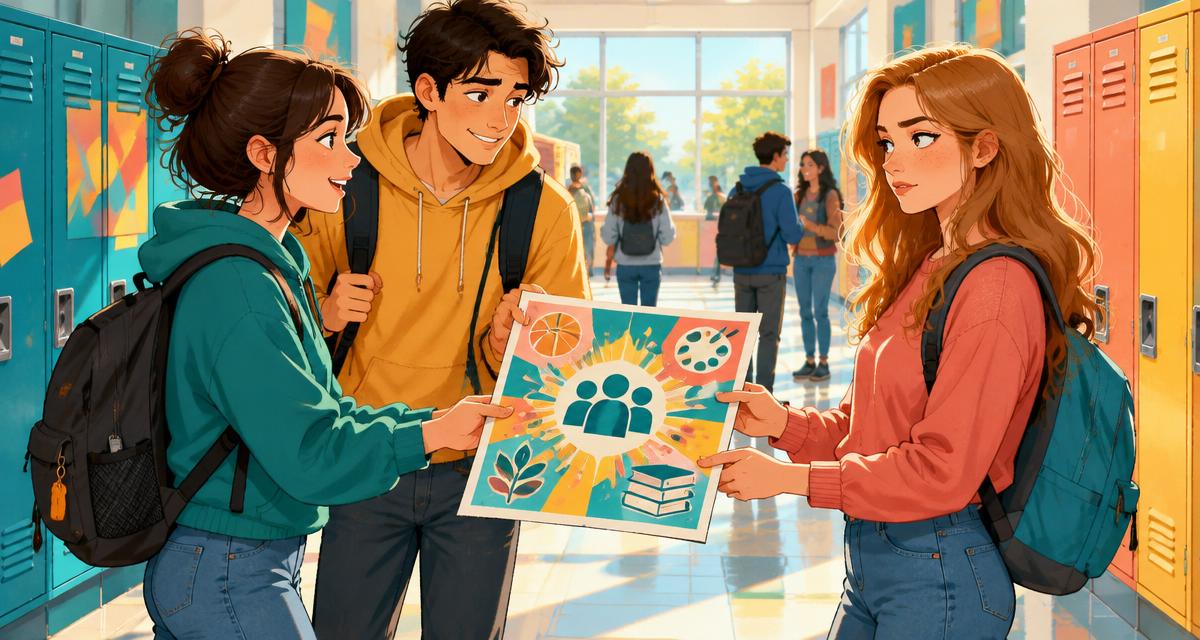
- Step 3: Choose style and review the artwork. Select an available art direction and assess whether the result reads as the character you described. A vibrant illustrated hallway can support a light YA mood. Remove prompts that emphasize bodies or adult glamour; focus on expression, clothing, school objects and the character’s activity.
- Step 4: Write an unfinished first message. Use the opener to place the character beside the damaged display. They hold two sketches and ask which one should go up. Leave your answer open. Avoid declaring that you are already best friends, rivals or a couple unless you explicitly want that fictional history and have stated it clearly.
- Step 5: Save and begin with a boundary instruction. Review the remaining creation prompts and any credit requirement, save the character, and open chat. Ask for strictly nonsexual, age-appropriate YA fiction centered on friendship, clubs and school life. Tell the AI not to decide your actions and to let disagreements have more than one reasonable resolution.
- Step 6: Make one choice and follow its consequence. Offer a compromise, ask why the sketch matters, or volunteer for a task. Use the next reply to explore what changed. After several turns, recap the deadline, the promise and the unresolved disagreement. This keeps the story focused without expecting the AI to remember every supporting detail perfectly.
Friendship, rivalry and crushes need different scenes
Friendship grows through attention and reciprocity. Let one character notice a missed lunch, save a seat or ask whether an apology helped. Avoid making the friend an endlessly available helper without preferences of their own. A warm disagreement can reveal that both people matter, especially when they have to decide how to share credit or responsibility.
Rivalry becomes interesting when the rival has a defensible goal. Two students can both deserve the lead role, or both want the club to succeed while disagreeing about the approach. Let them respect each other’s skill even when they compete. A reconciliation should not erase the disagreement; it should change how they handle it. A shared practical problem is a good way to show that change.
A gentle crush needs no explicit content. The scene might involve practicing a school-event invitation, feeling shy about a compliment or choosing whether to share a song. Keep the feelings uncertain and avoid pressuring the other character to reciprocate. Rejection can be handled kindly. The story can continue through friendship, self-respect and new interests rather than treating romance as the only successful ending.
We are fictional students repairing an arts-club display after class. Keep this strictly nonsexual and age-appropriate. You want your sketch included but do not want to upset your friend. Show that conflict through a small action and a short conversation. Leave my response and feelings for me to decide.
Use chapter beats instead of constant cliffhangers
A Wattpad-style rhythm can be approachable: an immediate hook, an emotional complication and a decision that gives the next scene a reason to exist. That does not require a shocking revelation every few messages. The crossed-out name can be explained by a misunderstanding, and the satisfying question can become whether someone has the courage to correct it publicly.
Outline three modest beats in your own note. First, the display goes wrong. Second, a repair forces two students to cooperate. Third, someone gives another person credit when it matters. Each beat should change a relationship or belief. If the story only adds more emergencies, pause and ask what the lead has learned or chosen.
End a session at a natural resting point: the display is ready, the apology is accepted or the invitation remains unanswered until tomorrow. Write a compact recap before the next chapter. For a different age-appropriate world, an original anime OC can carry the same themes of belonging and ambition without reproducing an existing franchise.
Troubleshooting and school-story FAQ
If the AI turns a small rivalry into cruelty, restate the tone and return to the last useful action. If it writes your dialogue, ask it to leave a question or unfinished gesture instead. If it forgets who made a promise, supply that fact in a short recap. Treat generated scenes as editable suggestions, not a fixed account of what happened. Never add private information to make the story feel more realistic.
Can a school story include a crush?
Yes, within strictly nonsexual, age-appropriate fiction and the platform’s safety rules. Focus on respectful conversation, uncertainty and ordinary school events. Do not include sexual content involving minors or adult-student romantic dynamics.
Can I recreate my classmates?
Use original fictional characters instead. Do not upload another person’s likeness or private information without permission, and do not use the story to harass or expose real people.
Does KOORI automatically manage a whole school ensemble?
This tutorial uses a character conversation. You can describe supporting people and keep your own cast notes, but it does not promise a synchronized multi-character group simulation or perfect continuity.
What if I want friendship without any romance?
State that the story is entirely platonic and center it on a shared task, club or ordinary conversation. The friendly-chat guide provides examples for that tone.