What does Fish Audio voice-to-voice mean?
The phrase can describe several different products. A voice conversion tool changes the sound of an existing recording. A conversational pipeline listens to a question, transcribes it, generates a text answer and speaks that answer. A native speech-to-speech model works more directly with audio representations. Those approaches should not be treated as interchangeable just because each produces a voice.
For character calls, we are interested in conversation rather than replacing the voice on a prerecorded clip. The important questions are whether the system can follow what you mean, respond in the character’s voice, stop when you interrupt and maintain a comfortable rhythm. An impressive voice sample alone does not demonstrate those capabilities.
What Fish Audio has confirmed today
Fish Audio has published voice-to-voice research before: its Fish Agent v0.1 3B model card describes a voice-to-voice model and cites 2024 work. Its official Agents documentation also describes a real-time voice-agent platform in public beta. That is meaningful evidence of conversational work, but neither source establishes the specific new native audio-model launch being discussed.
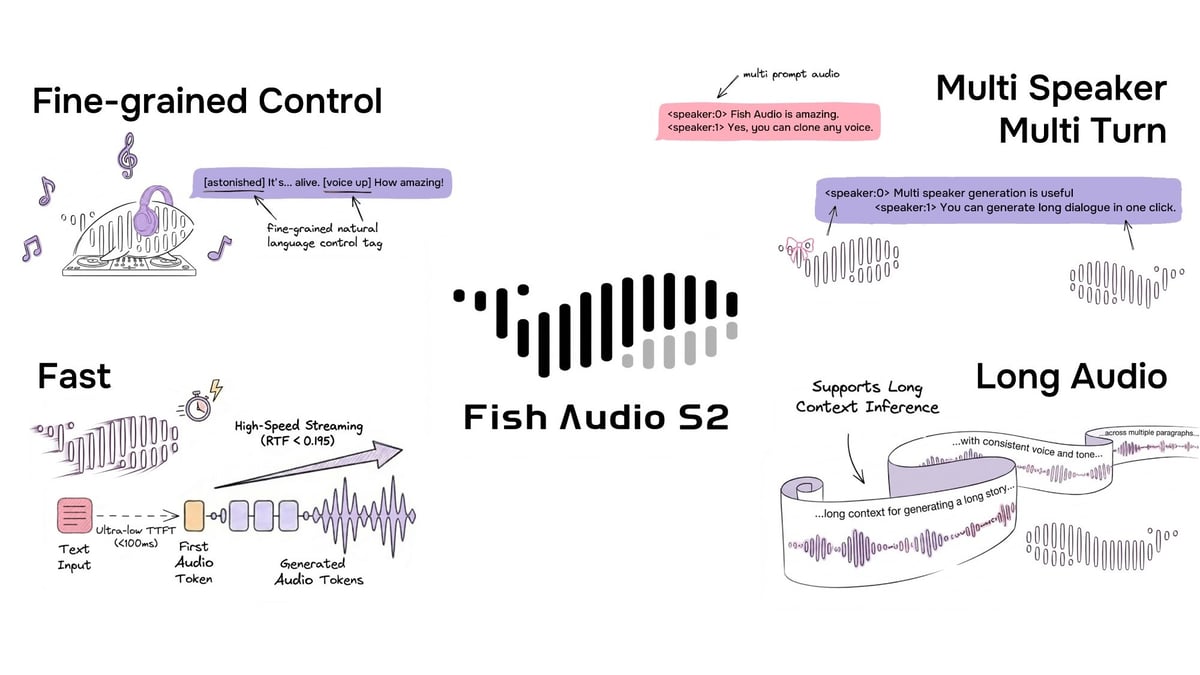
Separately, Fish Audio publishes speech generation, voice cloning and streaming tools. Its S2 article describes fine-grained speech control and production streaming. The Agents platform handles recognition, turn-taking and synthesis, but its overview does not establish that every stage runs inside a single native speech model. Historical research, hosted agents and a new model announcement are different milestones.
We are watching for an official voice-to-voice announcement with an identifiable model, documentation and access details. Until then, this article is a preview of the opportunity, not a launch report. We are not assigning a release date, claiming beta access or suggesting that Fish Audio has announced a KOORI partnership. When verified documentation is available, we can update this page with the direct source and what it actually enables.
From a text pipeline to native audio conversation
A common voice assistant combines speech recognition, a language model and text-to-speech. Each stage can stream and overlap, but each also has its own decisions and potential delays. Recognizing the end of a sentence, waiting for a meaningful answer and preparing playback all affect how natural the exchange feels. Network conditions and the device matter too.
An audio-native approach may preserve cues such as emphasis, hesitation or laughter that a plain transcript can flatten. That does not guarantee better understanding, faster replies or reliable emotional interpretation. A model still needs testing with accents, background noise, multilingual speech and ordinary interruptions. Published text-to-speech latency is not the same as total conversational response time; we will not present one as proof of the other.
Why this matters for AI character phone calls
A character is more than the sound of a voice. A practical ship mechanic might answer briefly, ask what broke and object to an unsafe shortcut. A curious forest guide might pause to inspect the strange object you describe. Spoken interaction should preserve those fictional preferences without turning every reply into a performance or a lecture.
The opportunity is a more free-flowing back-and-forth: one thought, one response, a follow-up when you choose. That could suit playful worldbuilding, a short mystery or friendly, platonic conversation. Our ambition is to let you keep a character conversation going naturally, not to create pressure to stay online. Longer conversations would still depend on actual availability, safety rules and the allowances shown in the app.
You are a fictional starship mechanic. Keep this friendly and SFW. Speak briefly and ask one question at a time. We are deciding what to name a repaired shuttle. Offer one name and explain it in one sentence, then leave room for my reply.
What you can try in KOORI now
You can explore published characters and begin with text chat. Spoken features depend on the character and the options available in the app. Existing live video calls require a completed call-avatar setup and an available call budget. They are AI character experiences, not human conversations, and not every character supports them.
KOORI already uses Fish-generated voice samples in its voice workflow. Existing live avatars use their own calling system; that is not a native Fish voice-to-voice connection. Phone calls remain coming soon. This article does not activate a new call engine, remove credit limits or make every character call-ready. If you want to explore the personality first, text is the simplest place to start.
What a future integration would need to get right
Before adding a new voice engine, we would need to verify that it supports the selected fictional voice, the character’s creative direction and safe conversation. Interruptions should stop playback rather than leave two voices competing. Microphone controls, connection loss and permission refusals should be understandable on a phone. A faster model is only one part of that experience.
We would also need real measurements of response time, reliability and cost across supported devices. There is no confirmed launch date or unlimited-call offer here. Any future rollout should explain availability and limits before a paid action. Voice cloning must respect permission and identity rights; do not upload someone else’s voice or use an AI character to impersonate a real person.
Natural conversation still needs clear boundaries
An expressive voice can make fictional dialogue feel immediate, but it does not make the character a person, therapist or emergency service. Keep sensitive personal details out of conversations and read the privacy policy before using spoken features. Speech is still input to an AI service, even when there is no visible transcript. Do not assume perfect confidentiality or permanent memory.
KOORI’s existing eligibility and safety rules would still apply to future calls. Guests and unknown ages use teen mode. A character should not demand your attention, guilt you into continuing or imply that it suffers when you leave. The goal is an optional creative experience that you can pause, redirect or end whenever you want.
Where to follow the next update
Follow Fish Audio’s official blog and documentation for product announcements, and return to this Journal for what verified developments mean for KOORI. We will distinguish research, public access and an actual in-app integration rather than treating them as the same milestone. Meanwhile, discover a character, try a short conversation and decide what kind of world you would enjoy hearing next.
Sources and further reading
Editorial preview, November 8, 2026. Native Fish Audio voice-to-voice availability and a KOORI integration are unconfirmed. No release date, latency guarantee, partnership or unlimited calling is announced here.
More from KOORI Journal